Accessibility Framework
Auditing System
Standardising accessibility through a cross-functional auditing system.
😕 The problem
Good design shouldn't be exclusive, yet accessibility is often treated as a final check rather than a requirement. This reactive approach leads to broken workflows, expensive late-stage pivots, and friction between design and development. I believe that for a product to be truly good, it should be inclusive from the start.
💡 Taking action
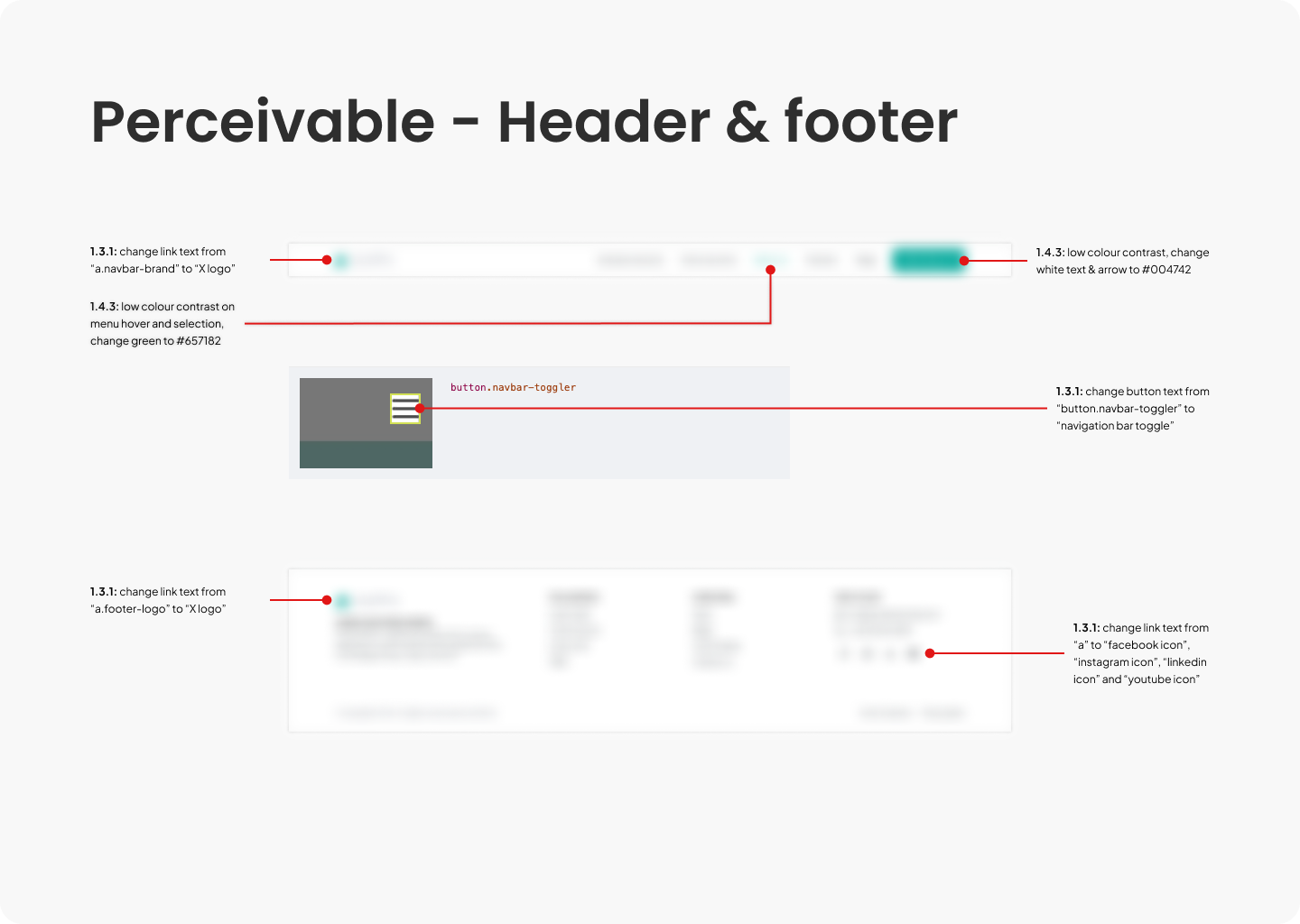
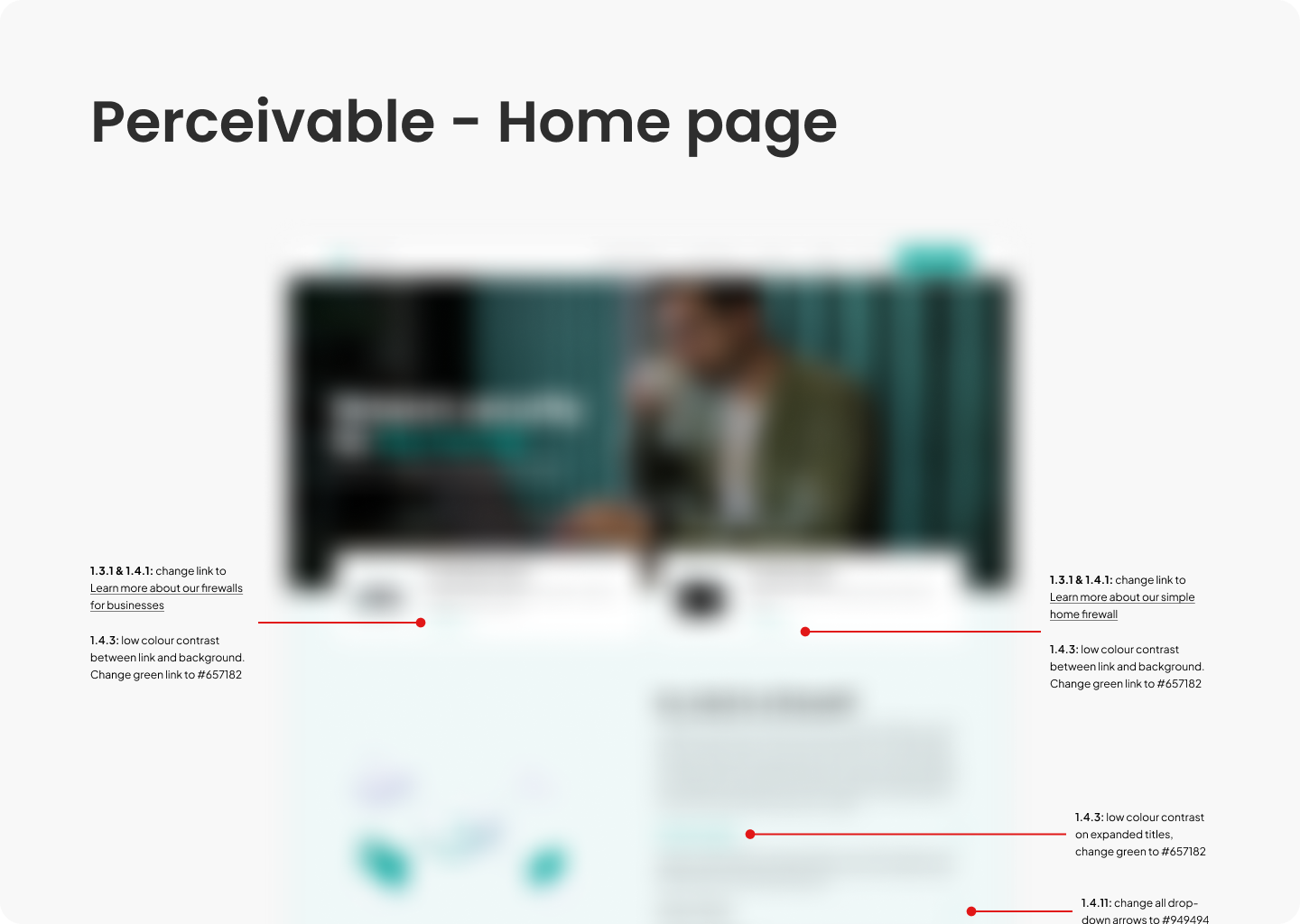
To make accessibility a fundamental part of the process, I translated the technical complexities of WCAG 2.2 requirements into a clear, actionable system. By condensing the requirements, I created a scoring system that makes complex accessibility logic easy for the entire team to follow and implement.
Audit Overview
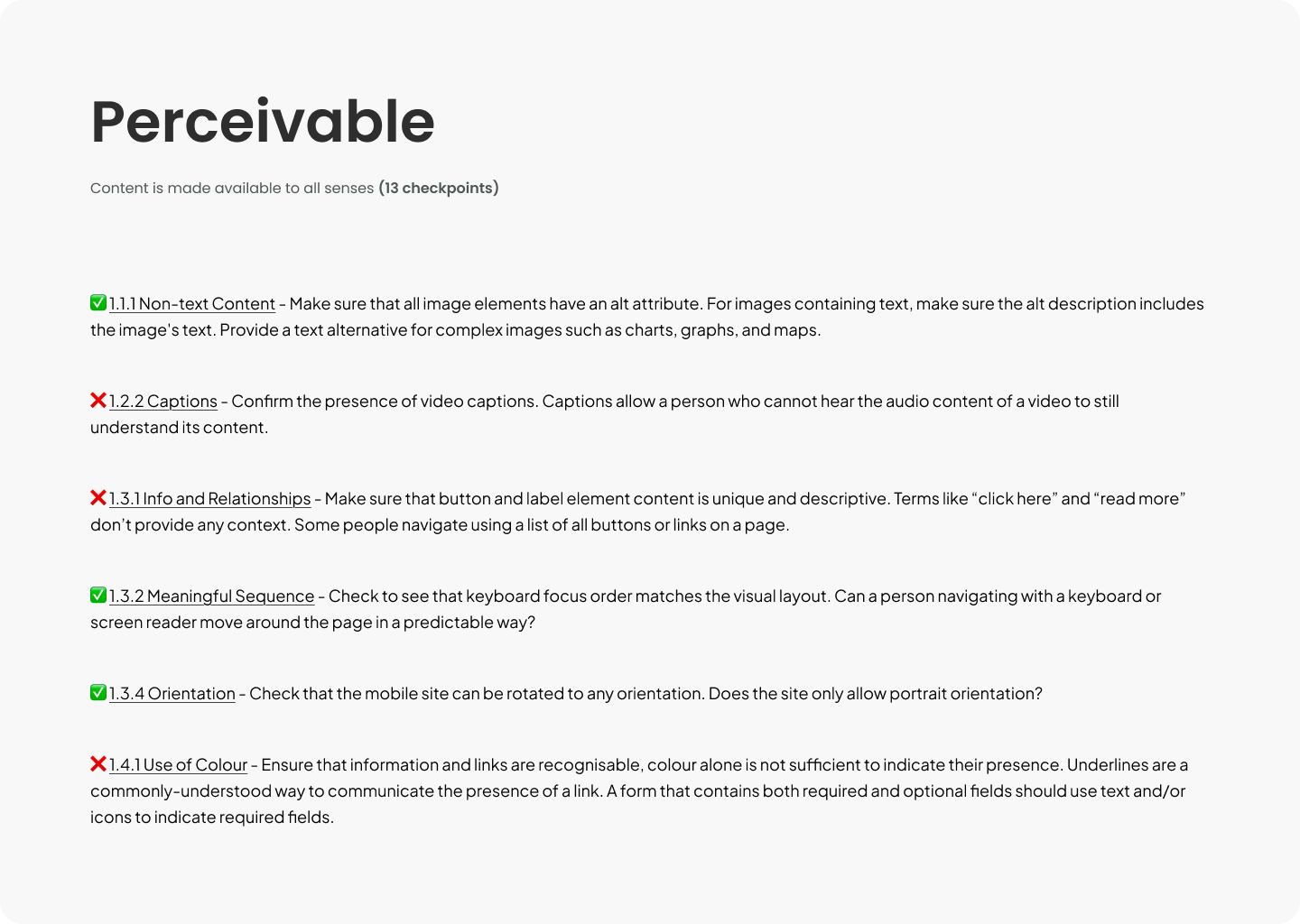
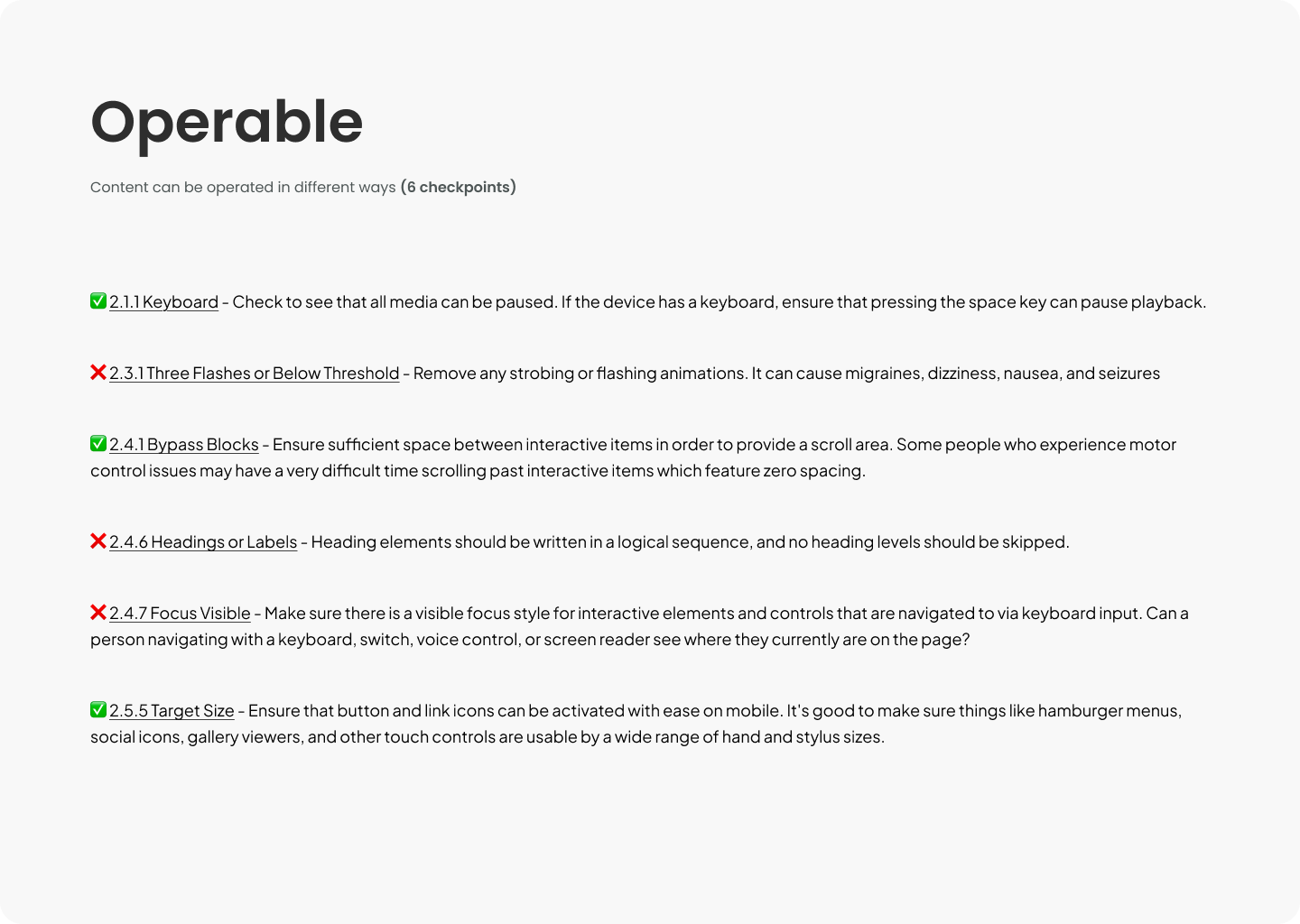
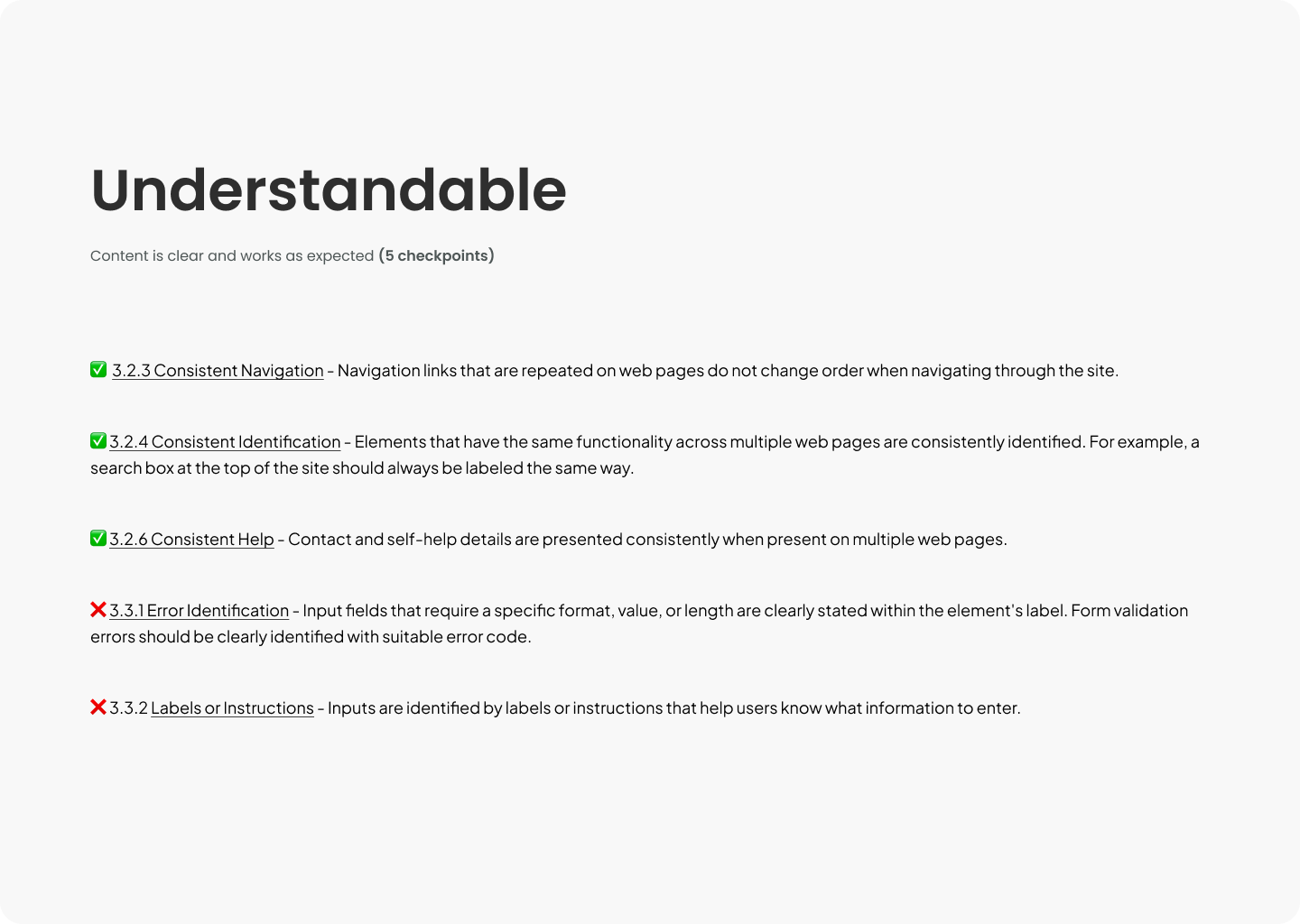
Based on WCAG 2.2 standards, this audit evaluates web accessibility through three key pillars: Perceivable, Operable, and Understandable. By focusing on these categories, the audit targets actionable principles that UI/UX specialists can directly influence and verify within the design phase.
Adhering to these guidelines ensures a more inclusive experience for users with visual, auditory, motor, speech, photosensitivity, and cognitive impairments. Ultimately, this approach makes digital products more usable for everyone.
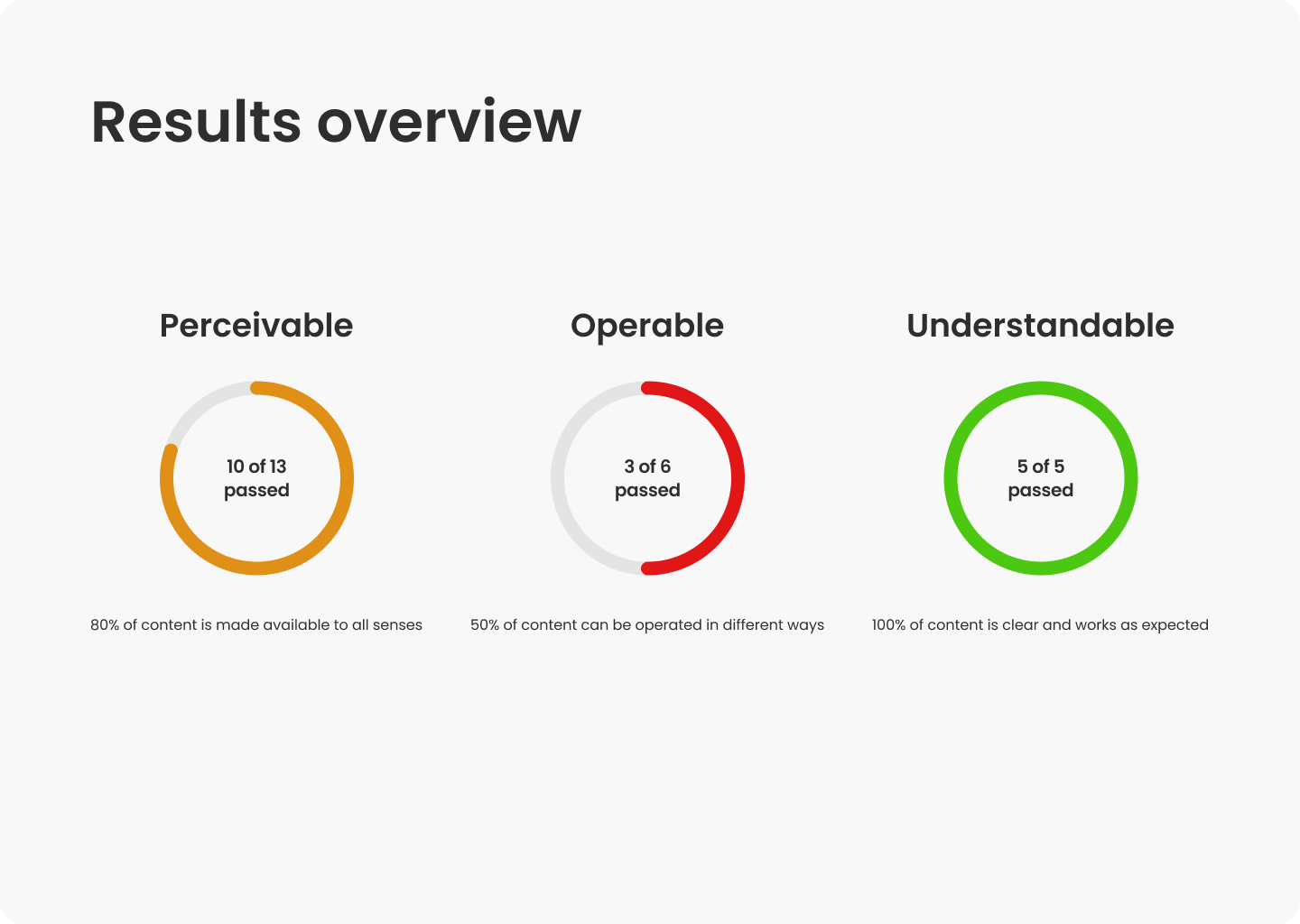
To pass the audit, a minimum score of 90% is required across these three categories. This high threshold ensures the user experience meets a high standard of accessibility before moving into the development phase.
Scoring System
While the specific audit results are confidential, I’ve shared a look into the underlying checklist structure and scoring logic below. This system translates abstract guidelines into measurable scores, ensuring digital products are as inclusive as they are functional.