La Spiga
Website Redesign
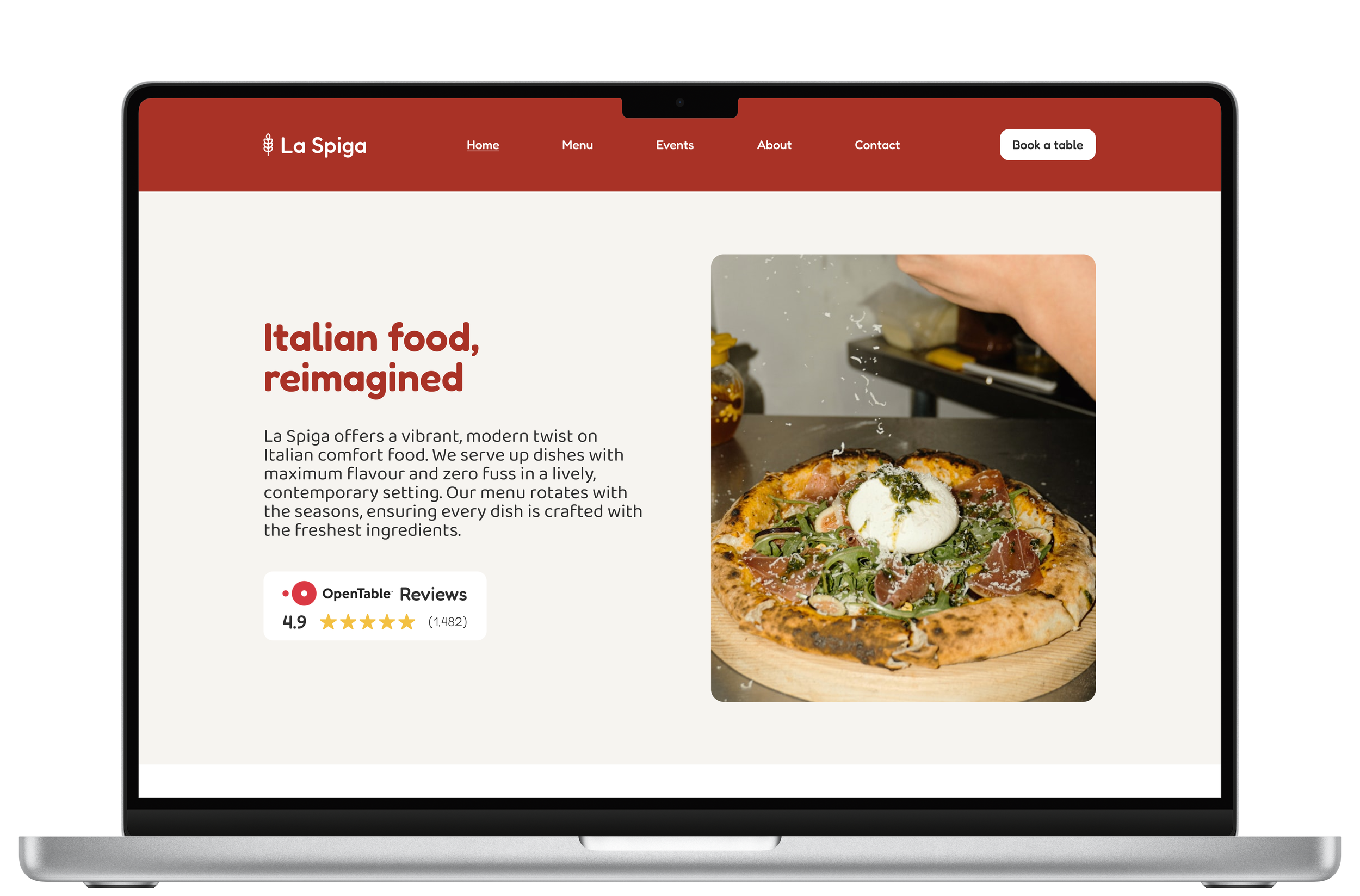
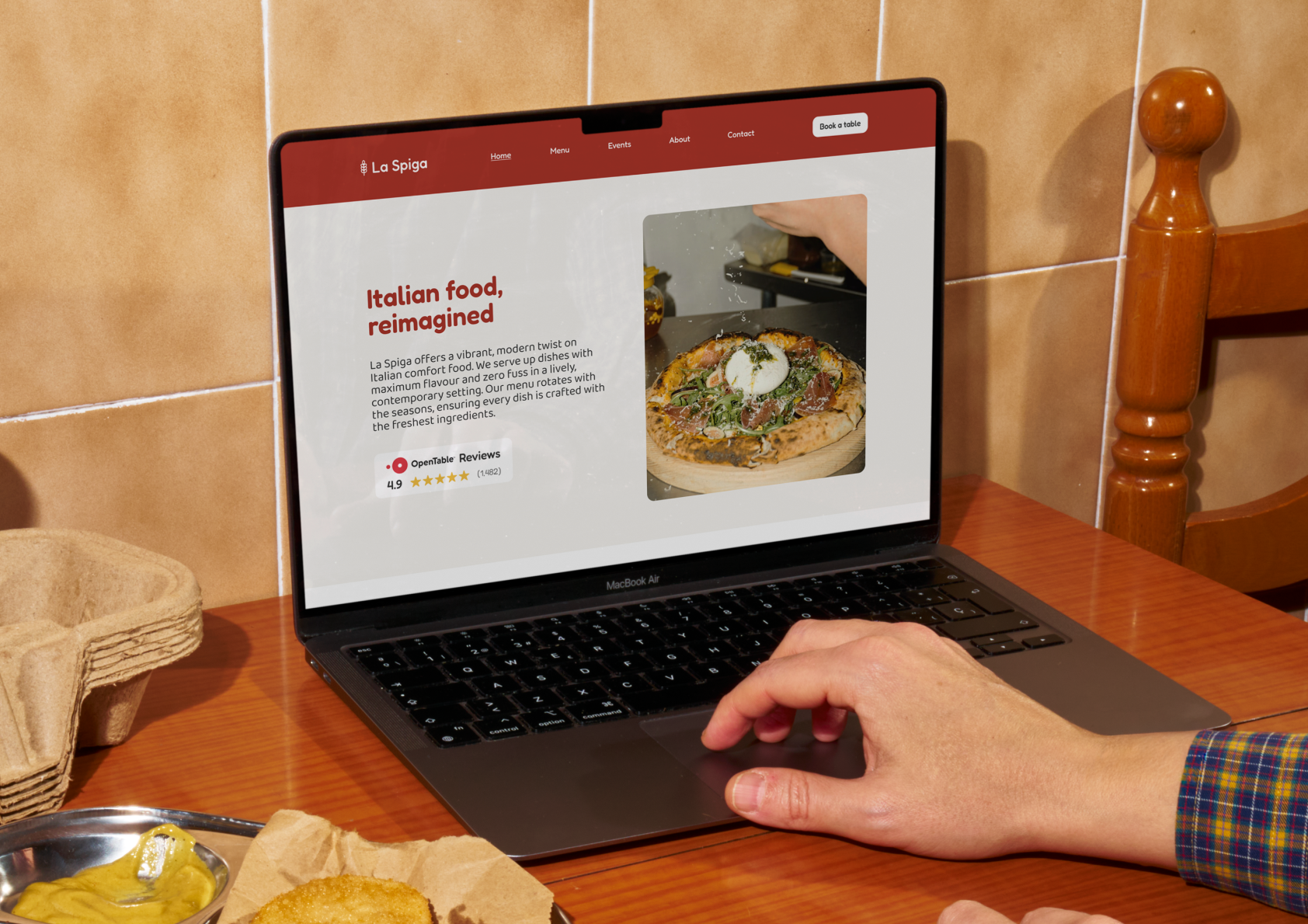
I completed this project in the role of a UI/UX designer while working at Dotlines UK. Due to an NDA, the original client branding has been white-labeled; all structural and layout elements remain true to the final design.
Background
La Spiga is an Italian restaurant that serves authentic pasta and wood-fired pizza. They offer a modern twist on Italian food.
My Responsibilities
I was tasked to transition the existing single-page website into a logical multi-page structure, focusing on improved navigation, accessibility, and content organisation.
Design Review
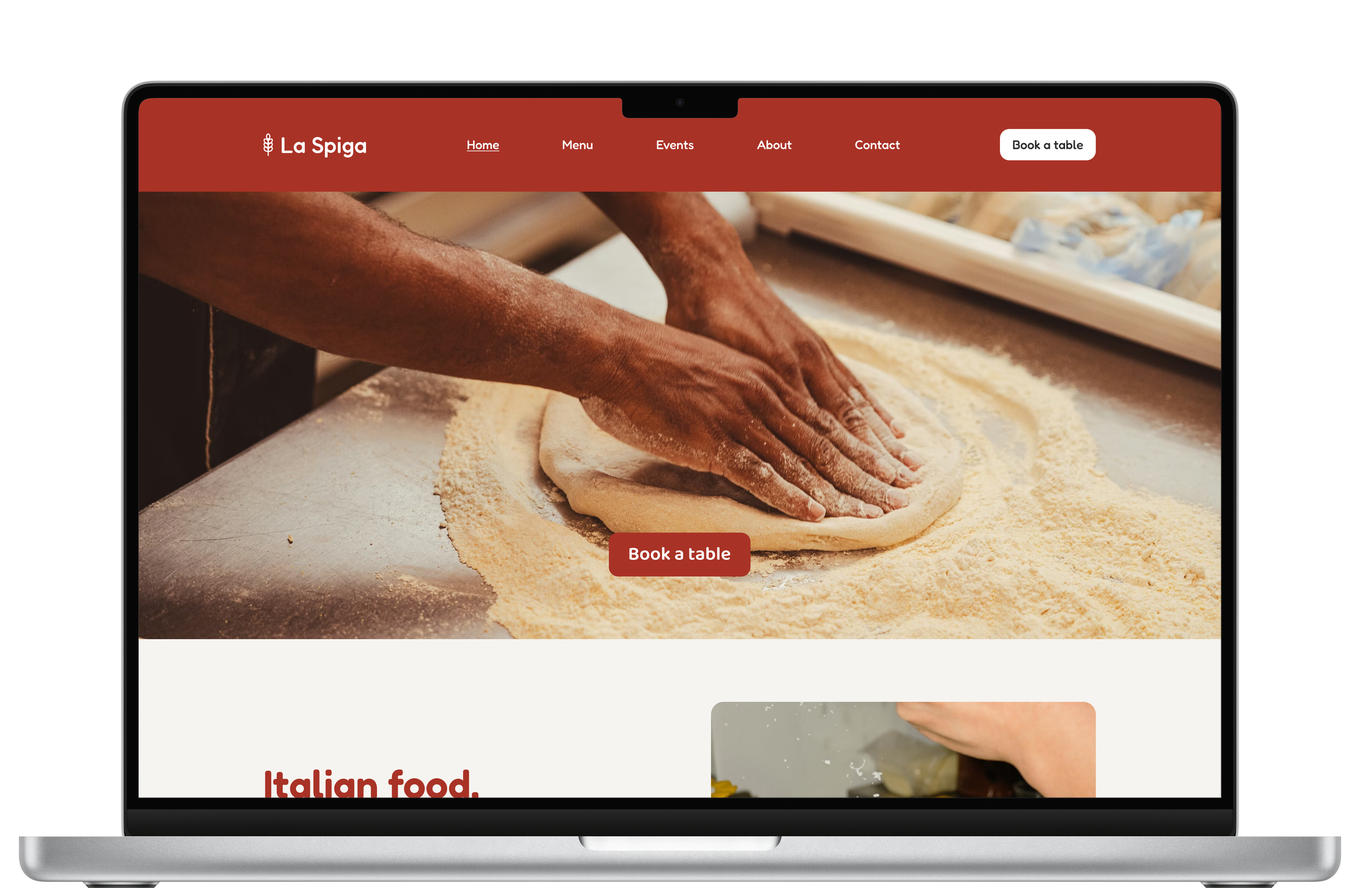
I reviewed the current website to evaluate what works and what doesn’t - assumptions from my point of view.
What works

Plenty of food imagery used throughout, though file sizes should be adjusted to improve site speed.
There are clear CTAs, like 'Book a table' and 'View menu' that guide users to key site areas
Use of embedded restaurant reviews, helping to build up trust of potential diners
What could be improved

Navigation is not intuitive; users must excessively scroll to view the full site content.
Font sizing and colour contrast don’t meet industry standards of (WCAG)
The visual design lacks distinct branding and a cohesive identity
Site Mapping
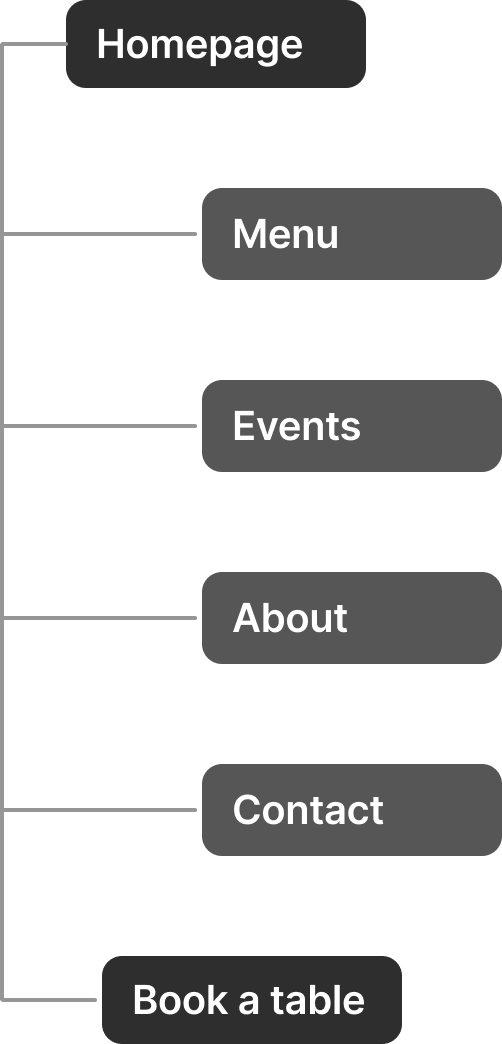
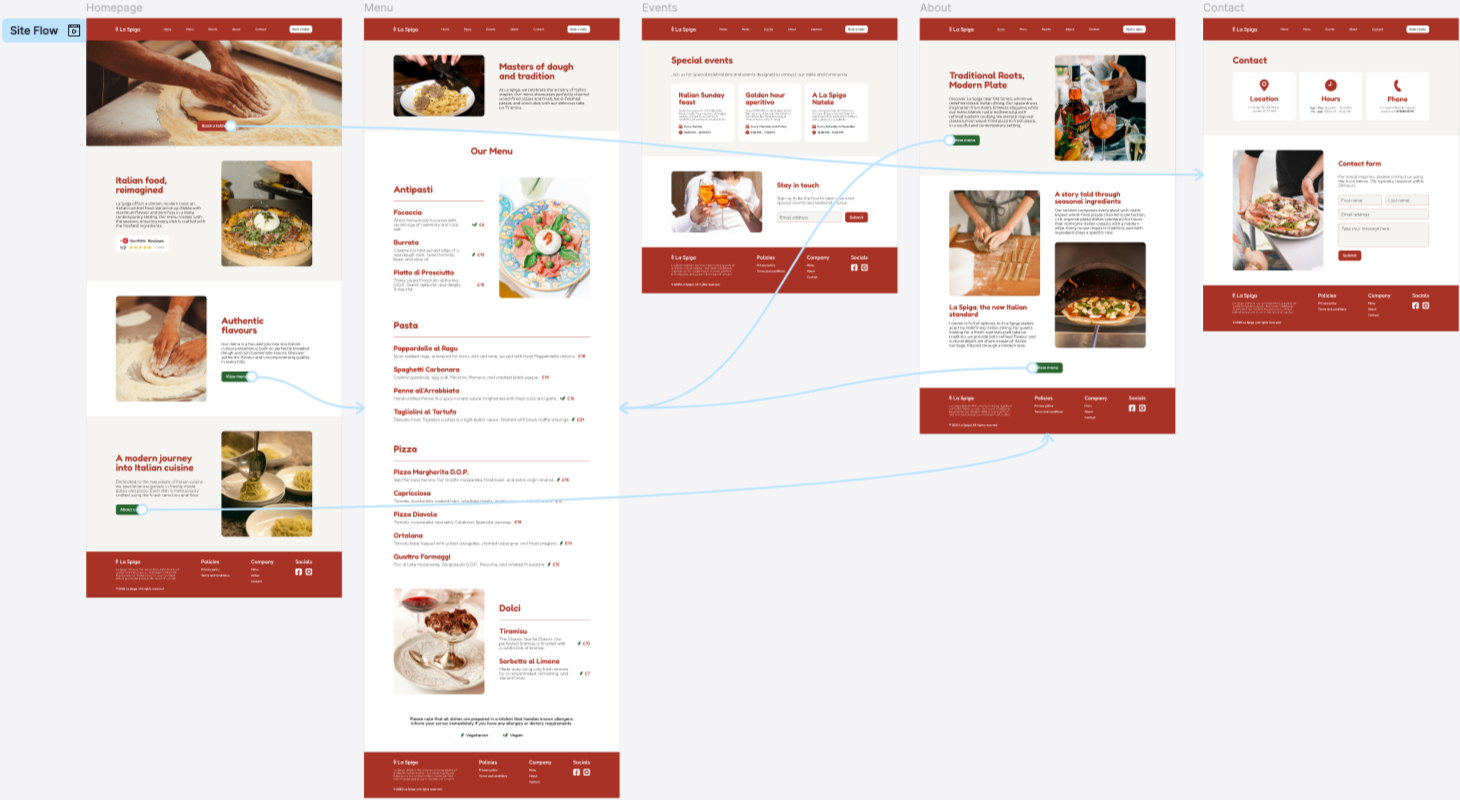
As the main objective was transforming the problematic site architecture, I mapped out a multi-page structure to ensure the navigation became logical and intuitive, moving away from the limiting single-page format.
Style Guide
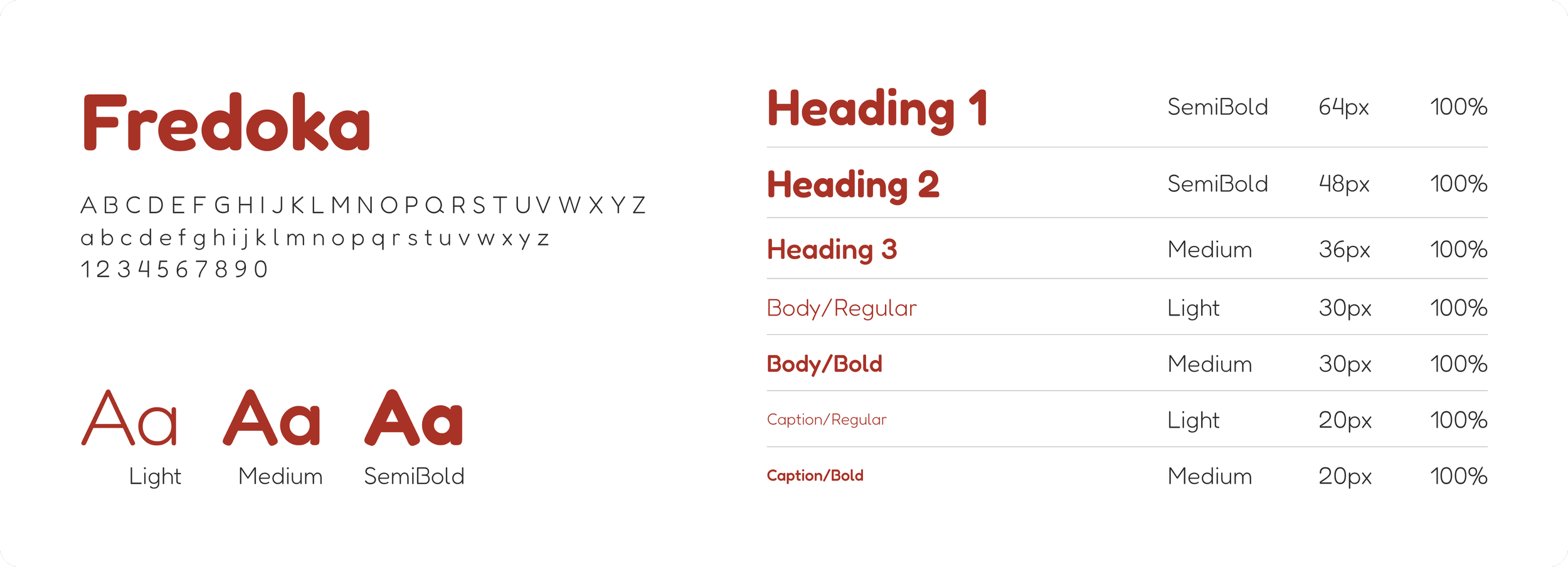
I refined the site's style guide to ensure all elements met both brand identity and Web Content Accessibility Guidelines (WCAG), optimising colour palettes and typography.
Colours
#886E4E
#2E2E2E
#296532
#A93226
#F6F4F0
Typography
Components
Buttons

Navigation menu

Footer

High-Fidelity Prototyping
Project Insights
I led the redesign of the site’s architecture and visuals, focusing on a clean, accessible experience. By reworking the style guide and sharpening the brand’s identity, I ensured the new site met accessibility standards. I then guided the project through the development phase, helping the tech team bring the designs to life.
Next Steps
This was a high-speed project with no room for a formal research phase. I leaned on my UI expertise to make quick, impactful decisions to meet the deadline. My next priority would be to test these designs with real users to validate my assumptions into data-backed improvements